
BONDED - COMPONENTS
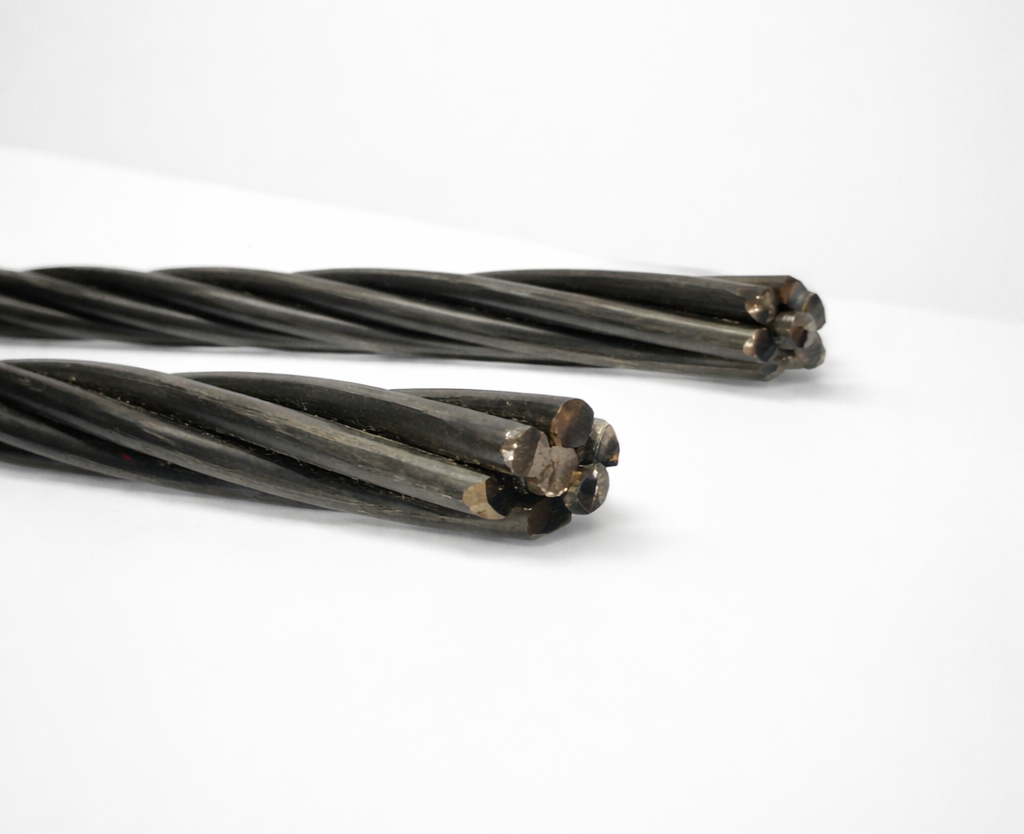
PRESTRESSING STEEL (STRANDS)
Prestressing steel strands are high-strength tensile elements used to apply controlled forces in bonded post-tensioning systems.
They ensure efficient load transfer, structural stability, and long-term performance within concrete.
Technical Properties
- Low-Relaxation 7 wire Strand of Class II (Grade 1860 as per ASTM A416–2010) with 12.9/15.2 mm nominal diameter used in Bonded post tensioning tendons shall conform to the requirements of IS 14268:2022
- Sectional steel area of Strand: 100/140 mm²
- Yield Load: Not less than 164/228 kN
- Ultimate Strength: Not less than 1860 N/mm²
- Minimum Breaking Strength: Not less than 186/259 kN
- Modulus of Elasticity: At least 195,000 N/mm²
- Relaxation at 1000 hours: Less than 2.5% at 70% Minimum Ultimate Tensile Strength
- Weight of Bare Strand: More than 0.78/1.1 kg/m
WEDGES
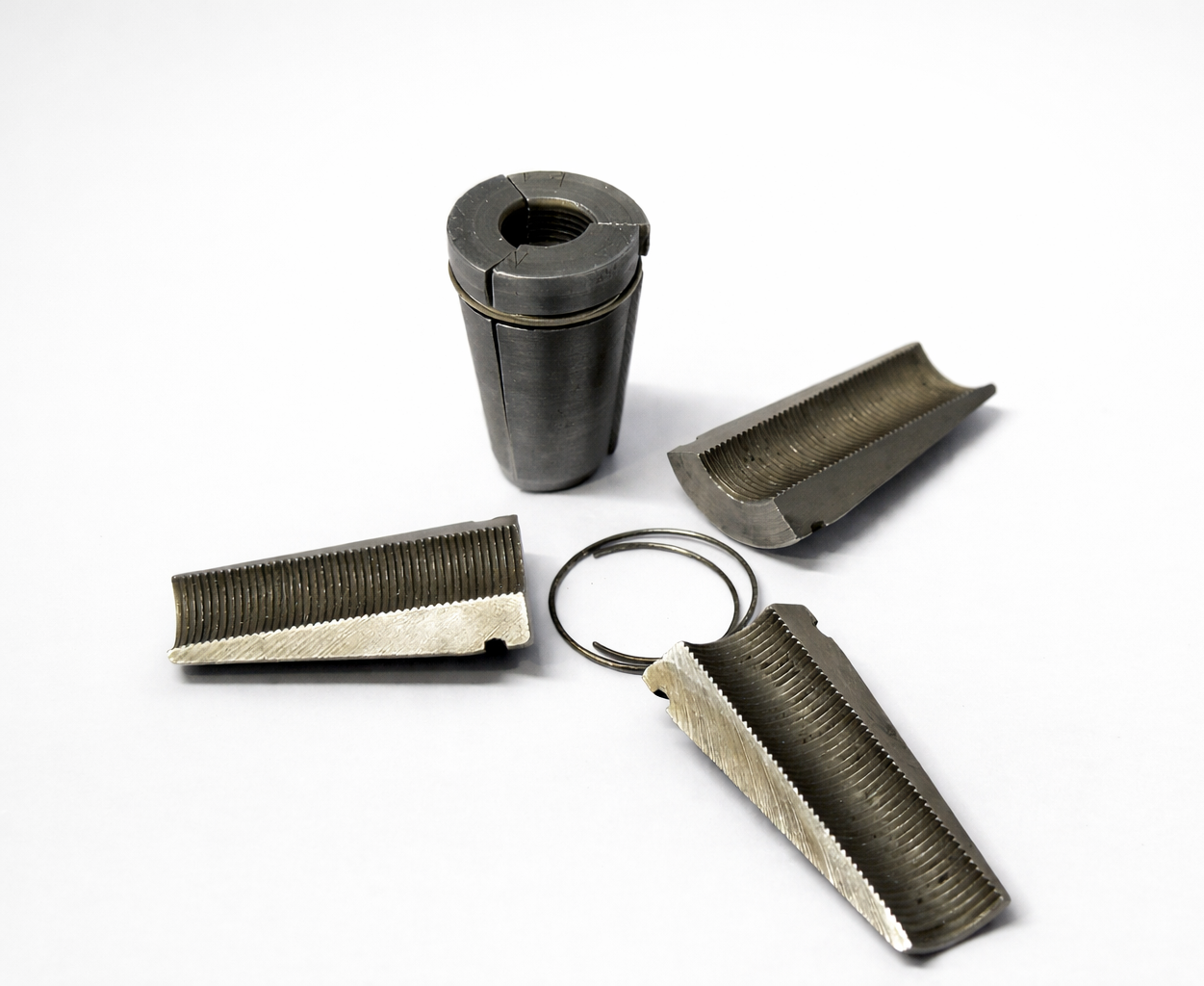
Wedges are precision-engineered mechanical components used within the anchorage system to grip and lock the prestressing strand securely.
They are manufactured with dual hardness characteristics a hardened outer surface for strong strand grip and a tougher, ductile core to absorb stresses ensuring reliable performance under high prestressing forces.
This controlled hardness profile prevents strand slippage while maintaining durability during stressing and throughout the service life.
Hardness Requirements
- At Surface: 56-65 HRC
Material Grades
- Material: 20MnCr5
DUCTS
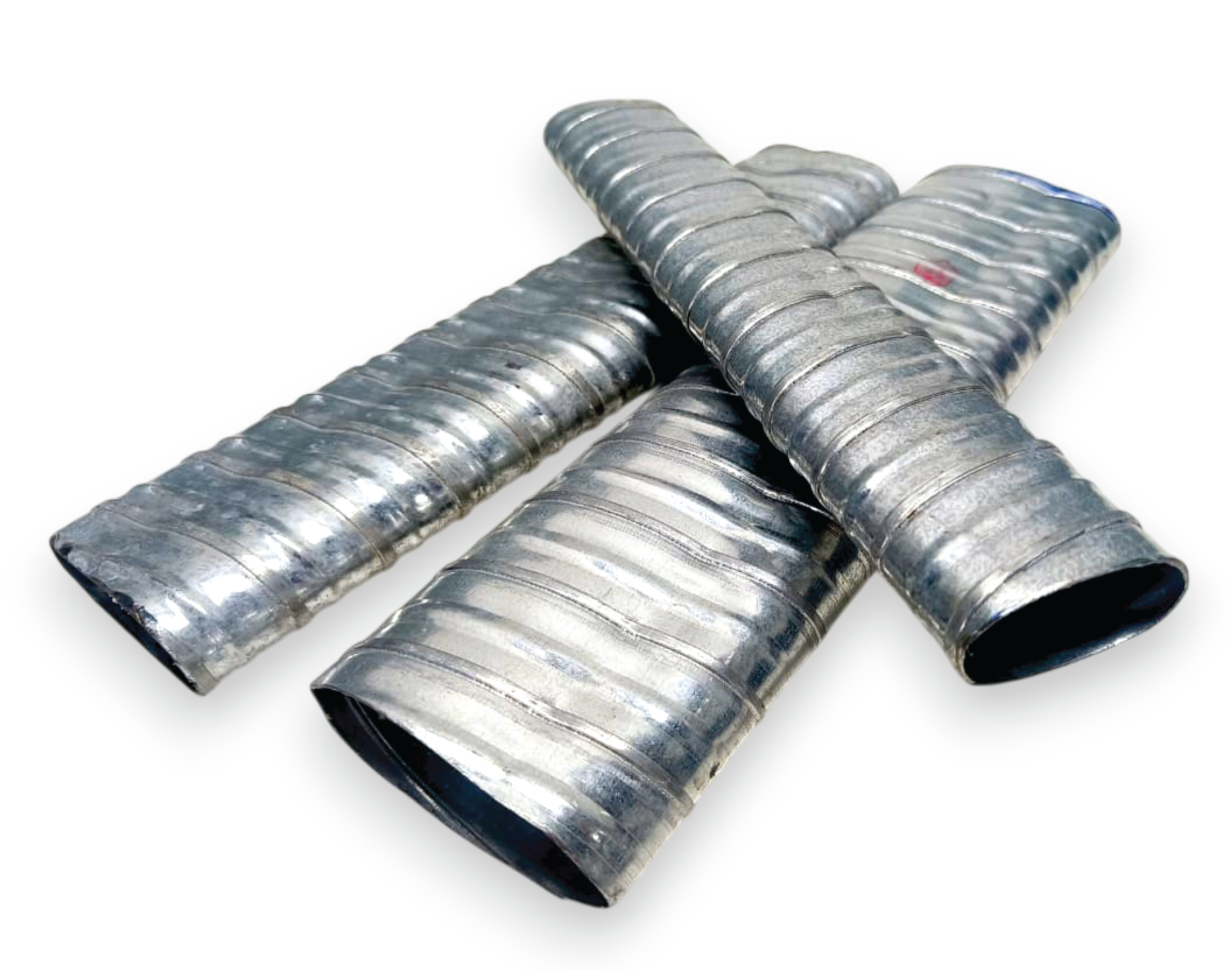
Ducts form the protective pathway for prestressing strands in bonded post-tensioning systems.
They are manufactured from corrugated galvanized steel strips, allowing flexibility for profiled tendon layouts while ensuring effective interaction between strand, grout, and surrounding concrete.
The corrugated profile enhances bond performance, prevents grout segregation, and stabilizes the tendon during stressing operations, ensuring consistent structural behavior.
Technical Properties
- Appearance: Corrugated
- Shape: Flat
- Width (Flat Ducts): 30 mm – 80 mm
- Thickness: 0.25 mm – 0.40 mm
- Material: Galvanized strip of steel
ANCHOR BLOCKS
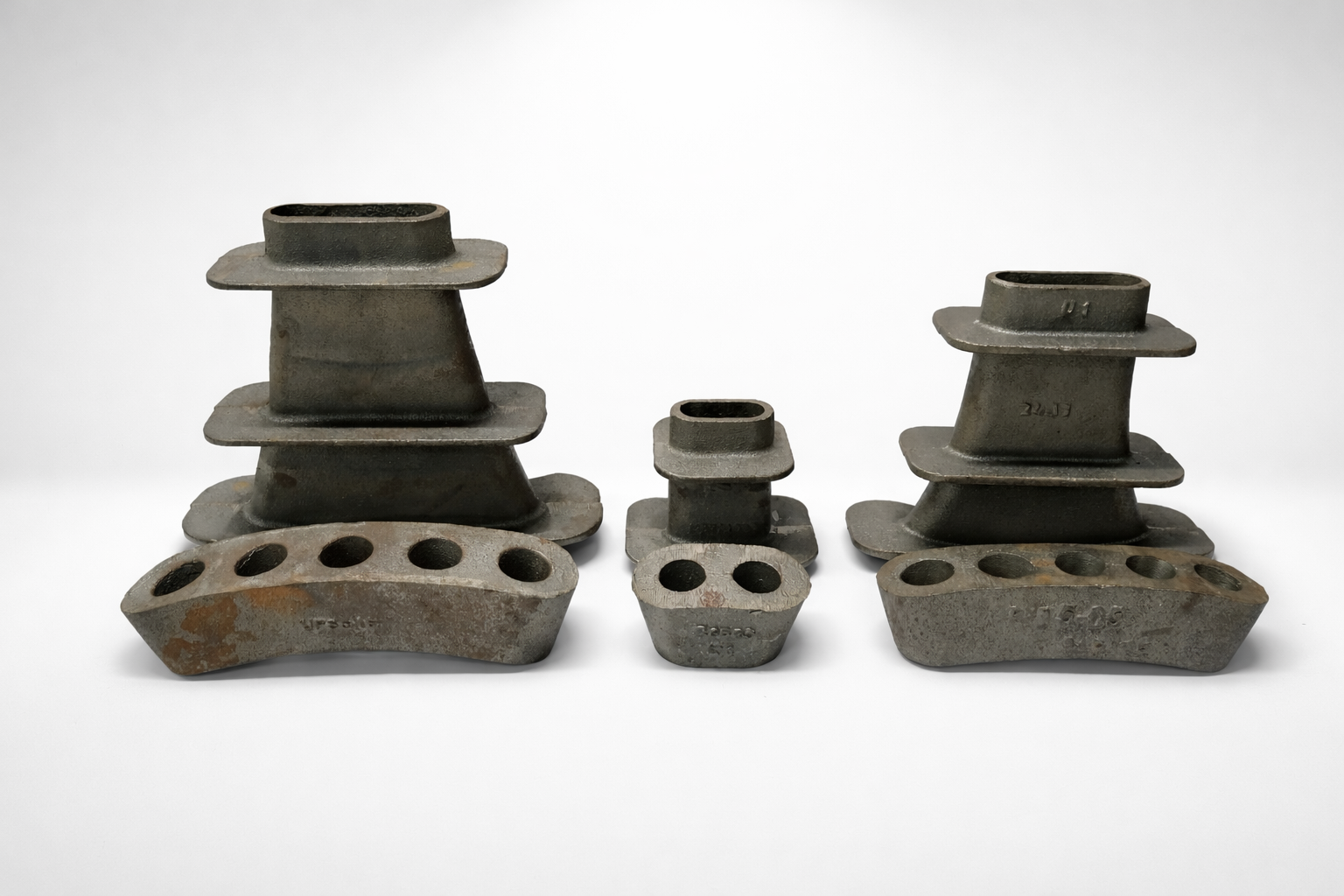
Anchor blocks, also referred to as anchorage heads, are critical load-transfer components that convey prestressing forces from the strands into the concrete member.
Their material quality, metallurgical consistency, and dimensional accuracy directly govern the safety, durability, and long-term performance of the post-tensioning system.
Manufactured from high-nodularity spheroidal graphite iron, anchor blocks provide excellent load resistance, crack tolerance, and stability under concentrated prestressing forces.
Technical Properties
- Tensile Strength: > 550 N/mm²
- Yield Strength: 340–350 N/mm²
- Nodularity: > 90%
- Hardness: 197–219 BHN
PRESTRESSING STEEL (MONO STRANDS)
Low Relaxation 7 wire Strand of Class II (Grade 1860) with 12.9 mm nominal diameter used in mono-strand unbonded post tensioning tendons shall conform to the requirements of IS 14268:2022.
Technical Properties
- Net Sectional Area of Strand: 100 mm²
- Yield Load: Not less than 180 kN
- Ultimate Strength: Not less than 1860 N/mm²
- Minimum Breaking Load: Not less than 186 kN
- Modulus of Elasticity: At least 195,000 N/mm²
- Minimum Elongation: 3.5% for a gauge length of 600 mm
- Relaxation at 1000 Hours: Less than 2.5% at 70% Minimum Ultimate Tensile Strength
- Weight of PE Coated Strand: 0.887 kg/m
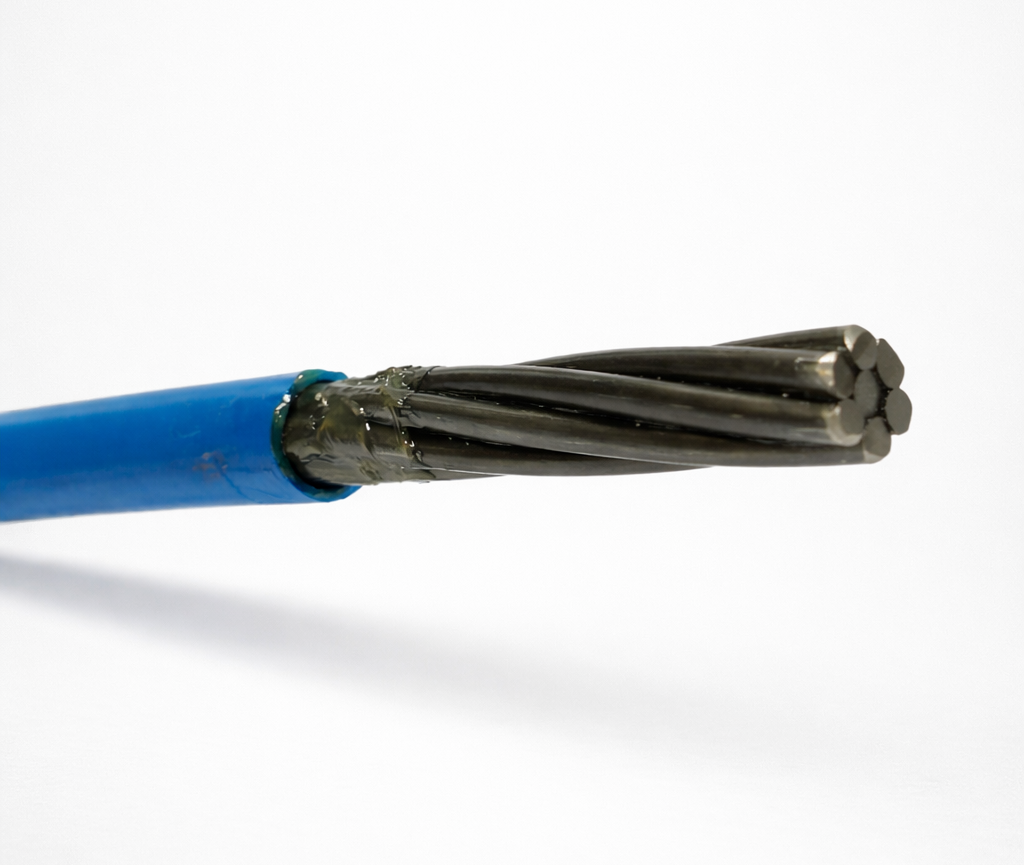
Grease Coating (Corrosion Protection Layer)
The prestressing strand is coated with a specially formulated corrosion-inhibiting grease that fully occupies the annular space between the steel strand and the plastic sheathing.
This grease acts as the primary corrosion protection mechanism and enables smooth, controlled tendon movement during stressing and long-term service.
- Grease coating shall provide protection against corrosion to the prestressing steel.
- It shall provide lubrication between the prestressing steel & sheathing.
- It should resist flow within anticipated temperature range of exposure.
- It should provide continuous non-brittle coating at lowest anticipated temperature of exposure.
- It should be chemically stable and non-reactive with prestressing steel, reinforcing steel, sheathing material and concrete.
- It shall possess appropriate moisture displacing and corrosion inhibiting properties.
- Minimum weight of the grease coating on the prestressing strand shall not be less than 1.14 kg per 30.5 m for 12.9 mm diameter PT cable.
- The coating material shall completely fill the annular space between the strand and sheathing & shall extend over the entire length of the PT cable.
Sheathing (External Plastic Jacket)
The strand and grease are enclosed within a seamless, high-density plastic sheathing that fully isolates the tendon from the surrounding concrete.
This sheathing prevents grease loss, blocks cement paste intrusion, and ensures durability under aggressive site and environmental conditions.
Technical Properties
- Sheathing Material: Polypropylene
- Minimum Density: 0.941 grams/cm³
- Thickness: More than 1.25 mm
- Appearance: Sheathing shall provide a smooth circular outside surface and shall not visibly reveal lay of the strand.
- Coverage: Sheathing shall be continuous over the entire length to be unbonded and shall prevent intrusion of cement paste or loss of grease.
WEDGES
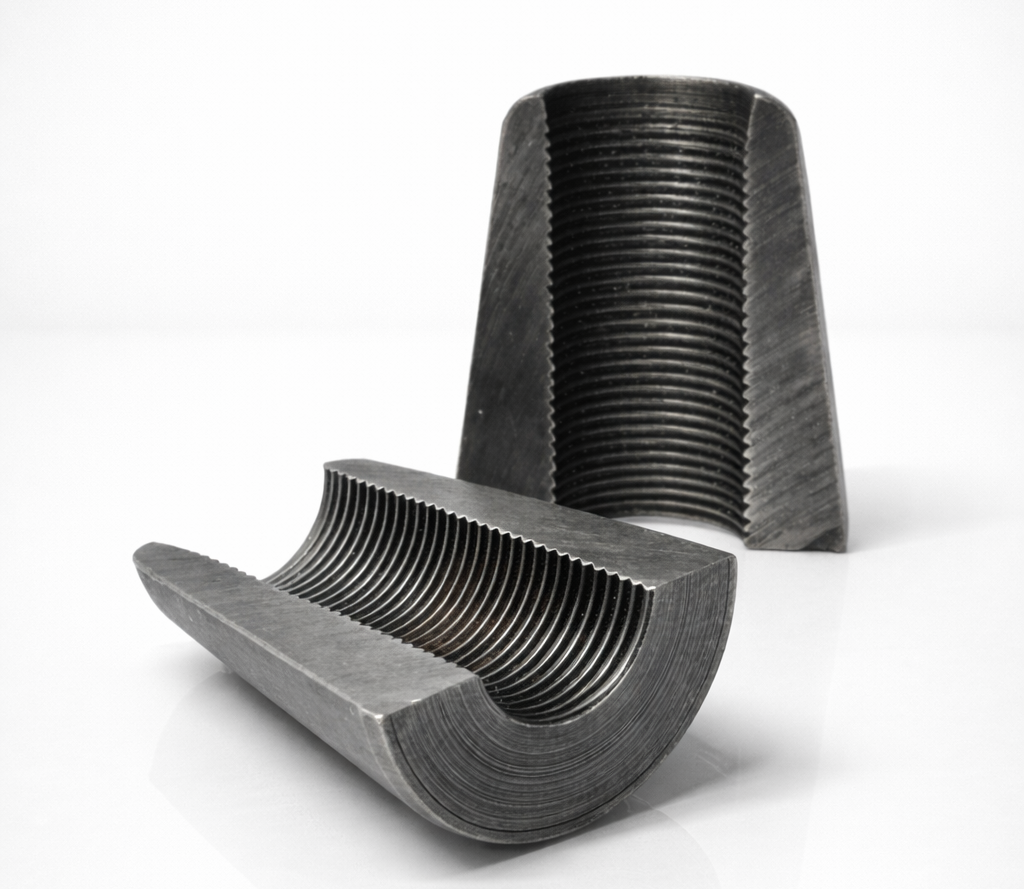
Wedges are precision-engineered mechanical components that grip the prestressing strand and transfer stressing force into the anchor plate.
Their hardness profile, metallurgy, and dimensional control are critical to achieving consistent anchorage performance under high prestressing loads and repeated stress cycles.
Hardness Requirements
- At Surface: 50 – 65 HRC
Material Grades
- IS: 9175 (Part 20)–1986 Grade 20MnCr5 or 20CrMnTiH or EN1A or 12L14
ANCHOR PLATE
Material Grade: ASTM A536 Grade 80-55-06 or IS 1865 Grade SG 500/7 or 550/6
Casting shall be non-porous and free of sand, blow holes, voids, and other defects.
MICROSTRUCTURE
- Graphite Type (AS PER ASTM A247 PLATE I & II)
I. Form I & II (Spheroid or Nodular type)
II. Distribution A (Uniform Distribution)
III. Size: 6–8 - OR
- Graphite Type (ISO/R 945)
I. Form VI (Spheroid or Nodular type)
II. Distribution A (Uniform Distribution)
III. Size: 6–8 - Nodularity: 90–95%
- Carbide: Less than 3%
- Pearlite: 35–40%
- Hardness Number Range (BHN): 170–260
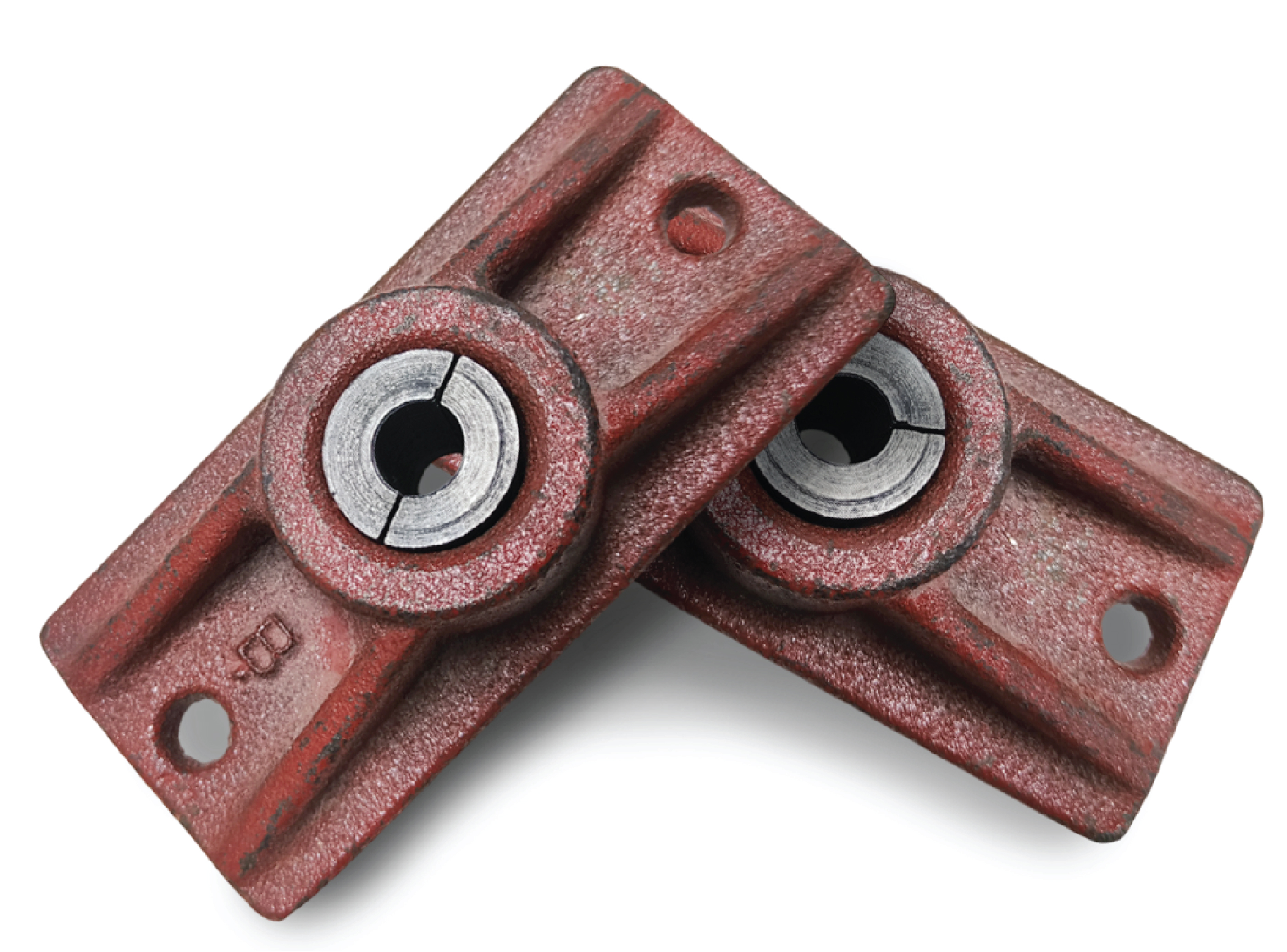
Standard Anchor Plate
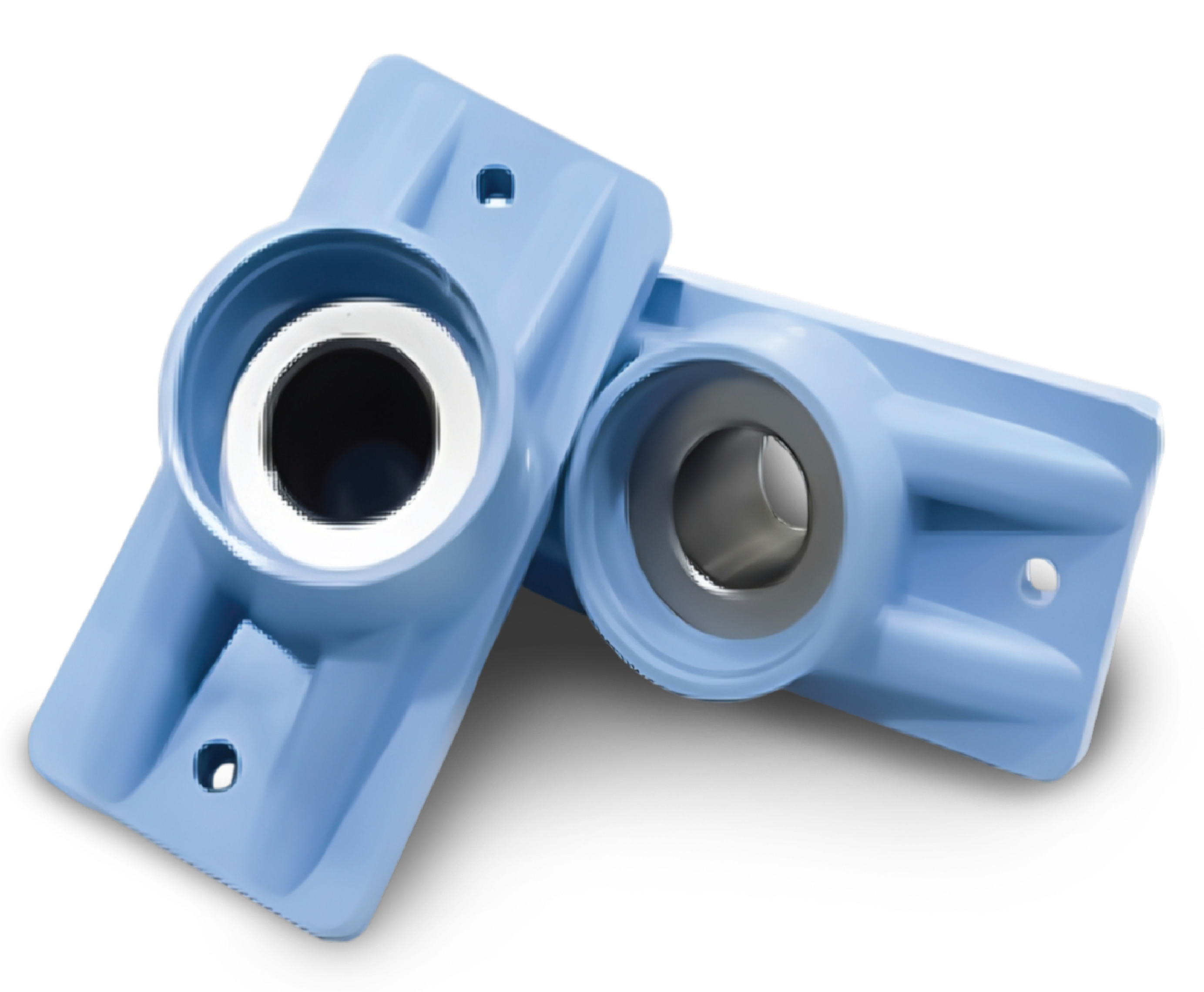
Encapsulated Anchor Plate